
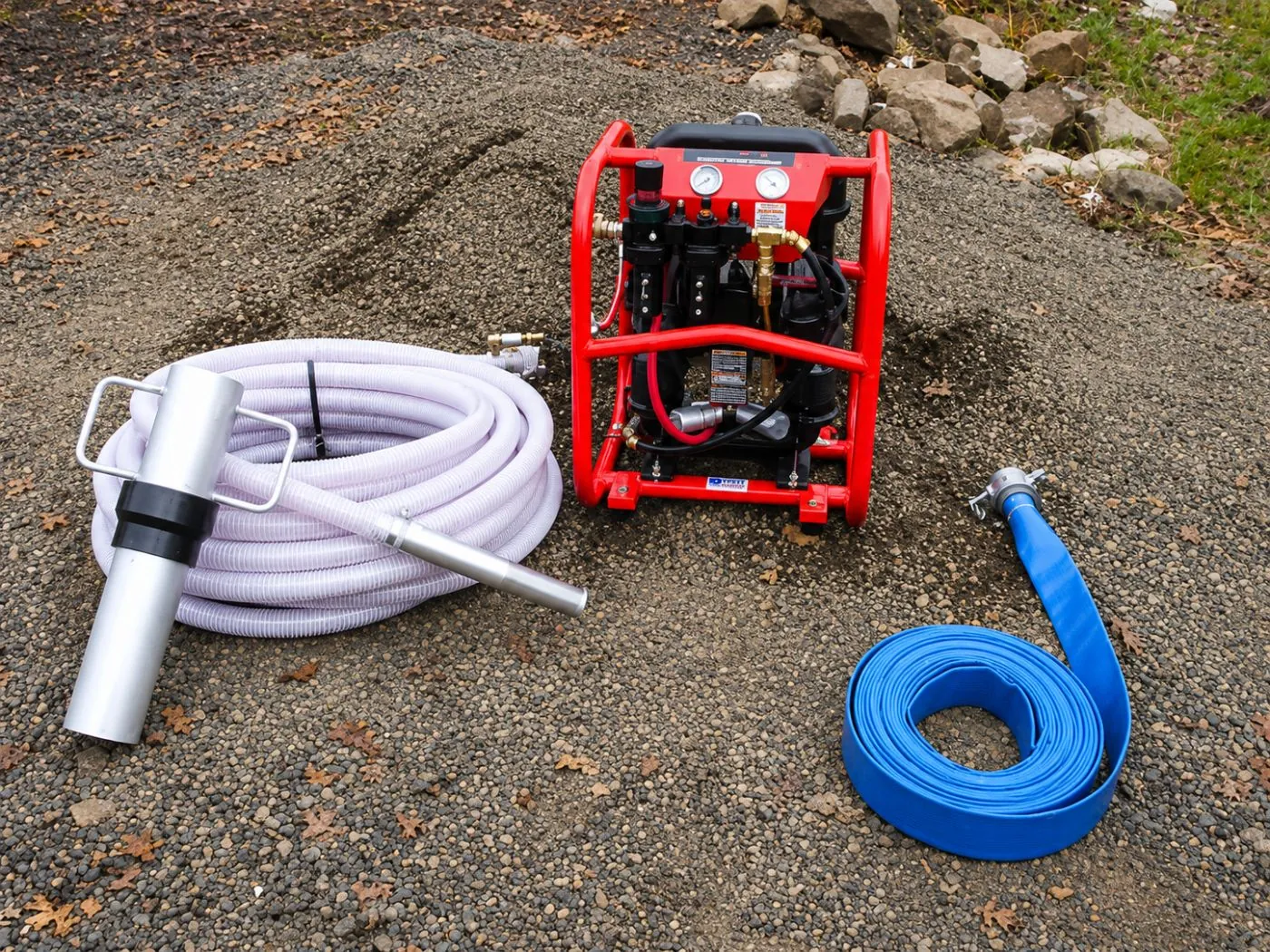
What ships with every DRE-80.
Air-operated double-diaphragm, non-ferrous, aluminum frame.
Clear, with the JT-175 Jet Nozzle fitted. Connects 1¼" or 1½".
Blue, 2". Lay it as straight as the ground allows.
The hole saver, sized to your bore.
Sleeve sizes.
Custom lengths and sizes available on request. Match the sleeve to the bore — a 3" sleeve suits a 3"–3½" hole.
Full specs.
Performance depends on your air supply and site conditions.
DRE-80 and DRE-80C manuals available on request.
Air is the only input.
Simple enough to maintain in the yard.
Flush with clean water, inspect for damage.
Overhaul the seals.
Built-in lubricator, KILFROST or compatible pneumatic oil, 1 drop every 2 minutes.
Read this first.
Questions we get asked.
What sleeve sizes are available?+
Borehole sleeves come in 2", 2½", 3", 3½" and 4". Custom lengths and sizes are available on request.
What air supply does it need?+
65–100 PSI at 70–100 CFM, from a standard jobsite compressor or a drilling rig. Minimum useful supply is 70 CFM at 75 PSI; it runs best at 100 CFM at 90 PSI.
How much water will it move?+
About 15 GPM at 30 ft, 8–10 GPM at 50 ft, and around 5 GPM at 100 ft. Performance depends on air supply and site conditions.
How quickly can a blast pattern be dewatered?+
Usually a few minutes per hole, clearing a full pattern quickly depending on water table conditions.
What maintenance does it need?+
Flush the pump with clean water after use and inspect it for damage. Overhaul the seals every three to five years.
How long will it last?+
20+ years properly maintained. Some of our original 1988 pumps are still running today.
What it saves on your pattern.
The specs tell you it will reach the water. This tells you what reaching it is worth — on your hole size, your column length, your explosive prices.
Most operations cover the cost of the pump inside the first month — and keep saving on every blast after.
Every Dry Borehole Starts Here
DRE-80 and DRE-80C manuals available on request.