
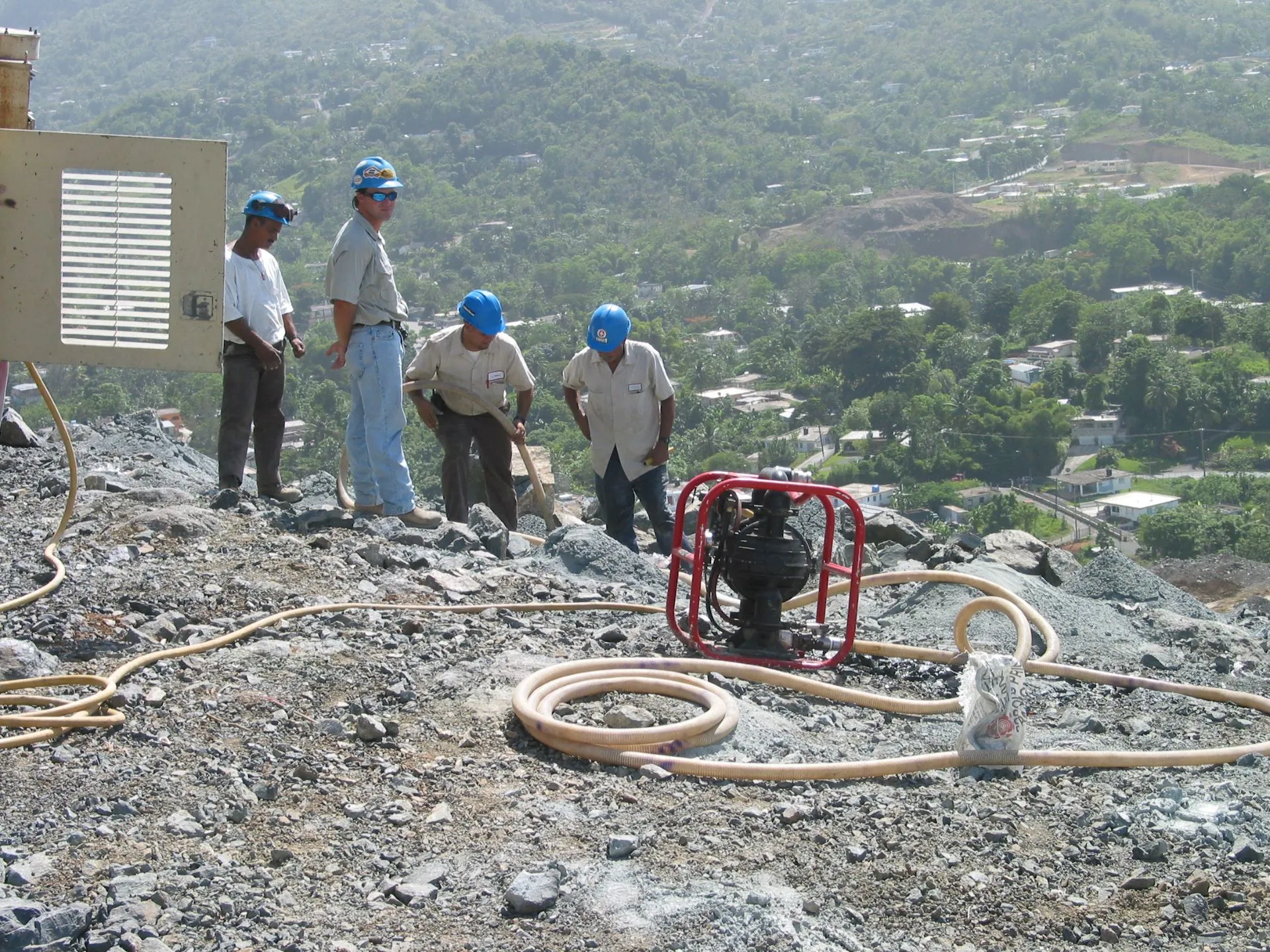
35+ Years Solving One Problem. Water.
For over three decades, Dryrite has built portable borehole dewatering systems trusted by mines, quarries, and blasting contractors. Family-owned and field-proven since 1988.
faster.
moving.
Freedom to blast your way.
- →Reclaim more ANFO usage
- →Lower cost per blast
- →Drop the water table on site
- →More flexibility for drill crews
- →No waiting on bigger pumping equipment
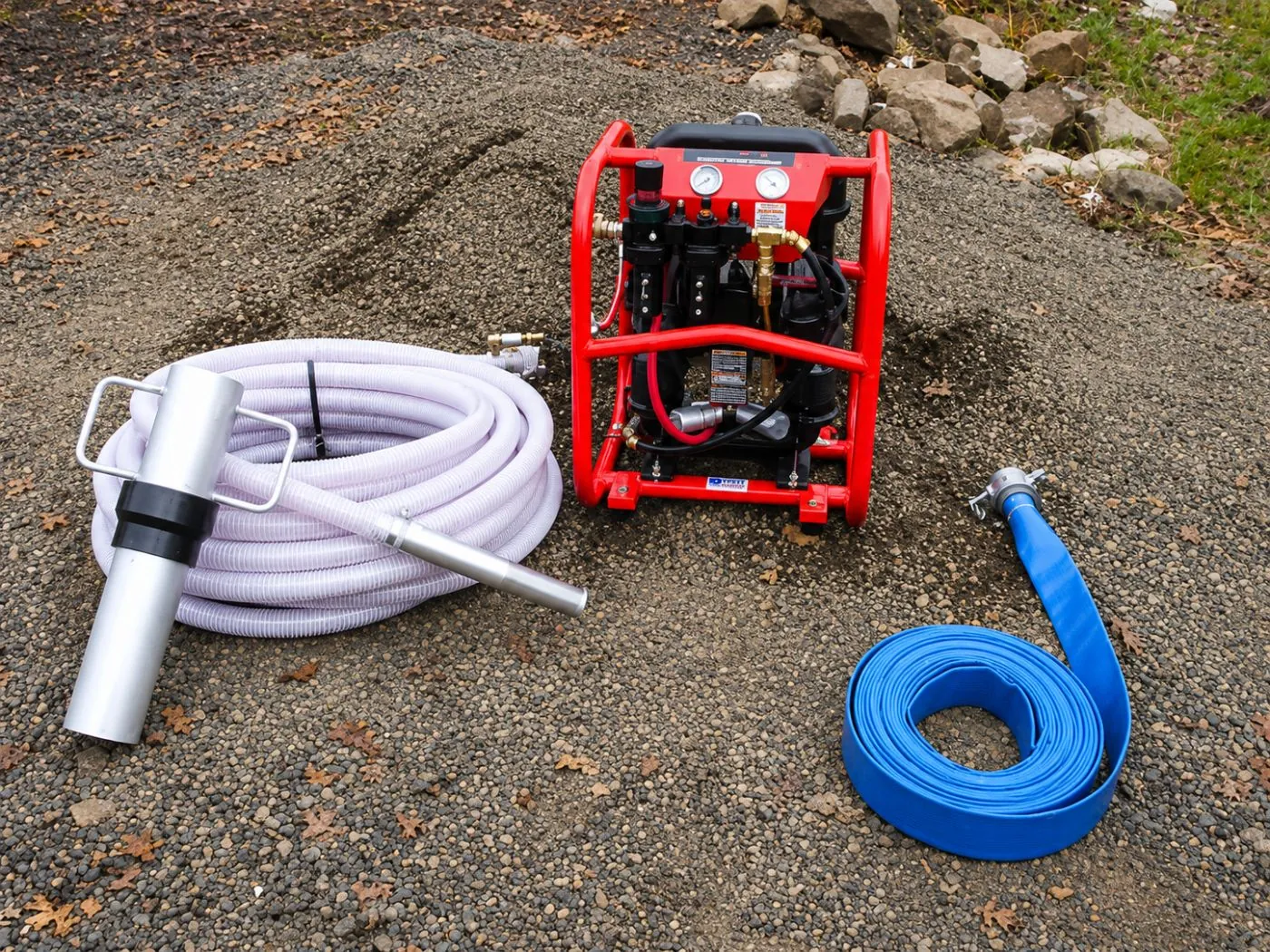
Wet holes should not determine your blast.
ANFO is cheaper and blasts better — but it can't sit in water. Emulsion is waterproof but expensive, and as the industry has shifted toward it, margins have gotten thinner for smaller blasting companies. Dewater the hole and that whole trade-off disappears.
Air in. Water out. Hole ready to load.
If you have a jobsite compressor or a drilling rig, you already have what you need to run it.
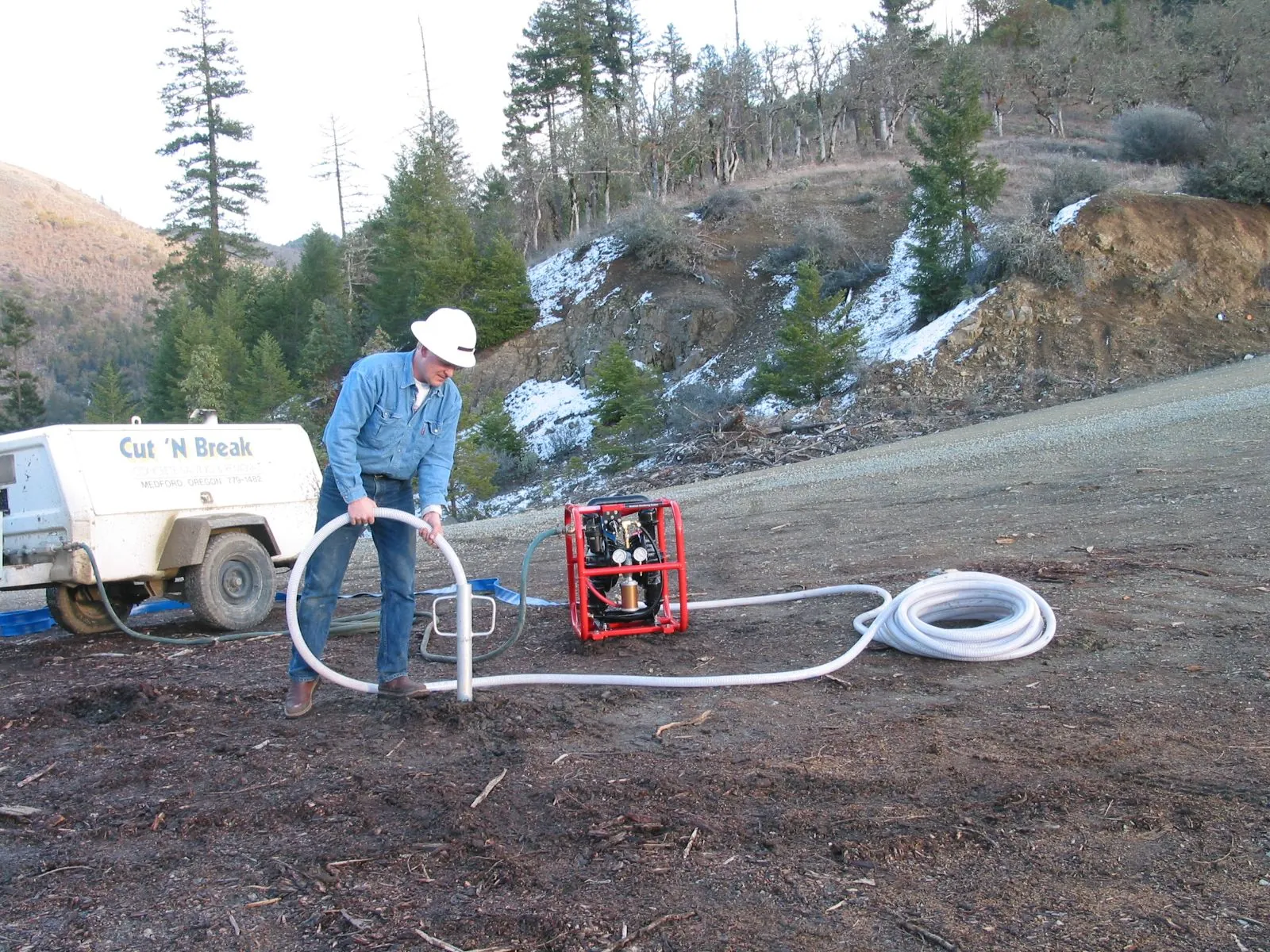
Hook compressed air to the pump through the king fitting, off your compressor or drilling rig.
Adjust the built-in air regulator and lubricator, then set the air pressure.
Open the main air valve on the pump.
Set the suction hose into the borehole.
Water pumps out through the discharge hose, usually a few minutes per hole.
Go hole to hole to drop the water table across the whole shot.
No electrical downhole equipment. Non-ferrous construction. Lower setup time than other pumps or vacuum systems.
Proprietary Jet Nozzle technology is what lets a compact, air-driven pump reach water other pumps can't touch.
Simple by design. Reliable by reputation.
A simple system with minimal moving parts means a long life with minimal maintenance. Some of our original 1988 pumps are still running today.
Around 100 lbs — hand-carried or vehicle-deployed, easy to move around a shot, and it fits in a pickup or trailer. Built for remote job sites.
Beyond new equipment, Dryrite supplies replacement and repair parts, full rebuild and refurbishment services, and direct technical support to keep your downtime short.
Now run the numbers.
Once you can dewater, the savings show up on every wet shot. Most operations pay for the pump on day one. See it for your own operation:
Most operations cover the cost of the pump inside the first month — and keep saving on every blast after.
Full specs.

| Maximum suction lift | Up to ~110 ft (standard operating range ~100 ft) |
| Flow at 30 ft | ~15 GPM |
| Flow at 50 ft | ~8–10 GPM |
| Flow at 100 ft | ~5 GPM |
| Air supply required | 65–100 PSI · 70–100 CFM |
| Air source | Standard jobsite compressor or drilling rig |
| Weight | ~100 lbs |
| Materials | Non-ferrous, no electrical downhole equipment |
| Service interval | Flush after use; overhaul seals every 3–5 years |
| Expected lifespan | 20+ years properly maintained |
| Models | DRE-80 · DRE-80C |
Performance depends on your air supply and site conditions.
DRE-80 and DRE-80C manuals available on request.
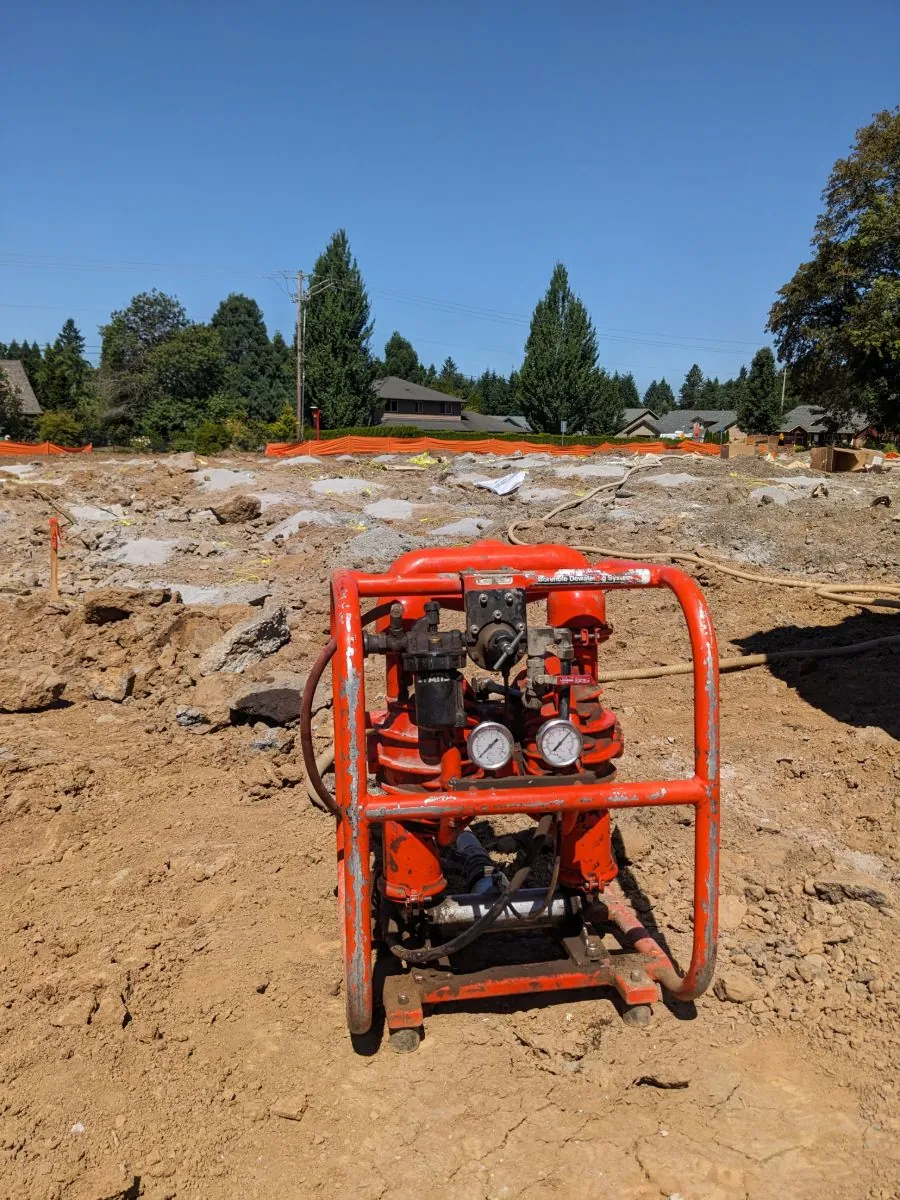
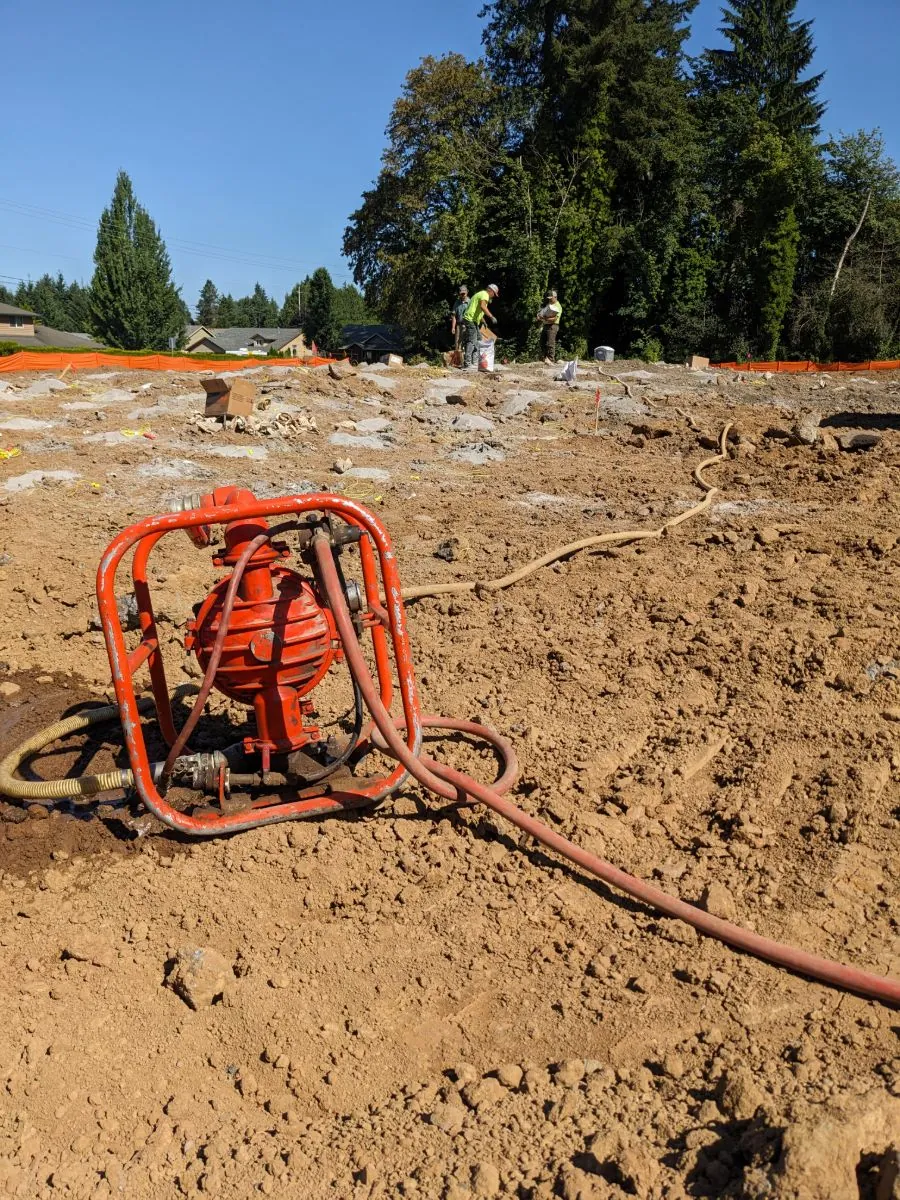
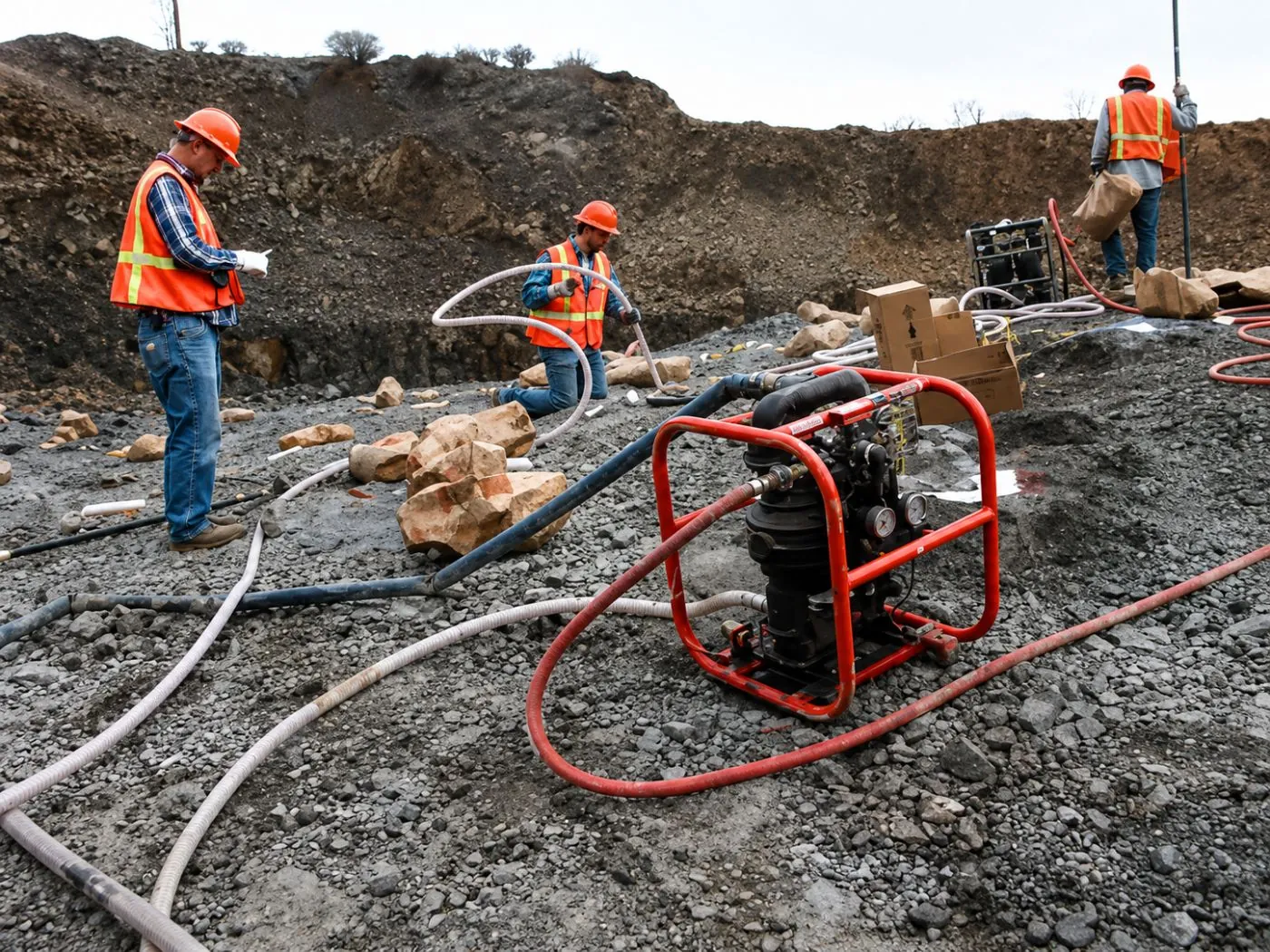
On the shot.
Dryrite pumps working active sites — deployed, loaded, and clearing water in real blast patterns.
A family company that knows the ground.
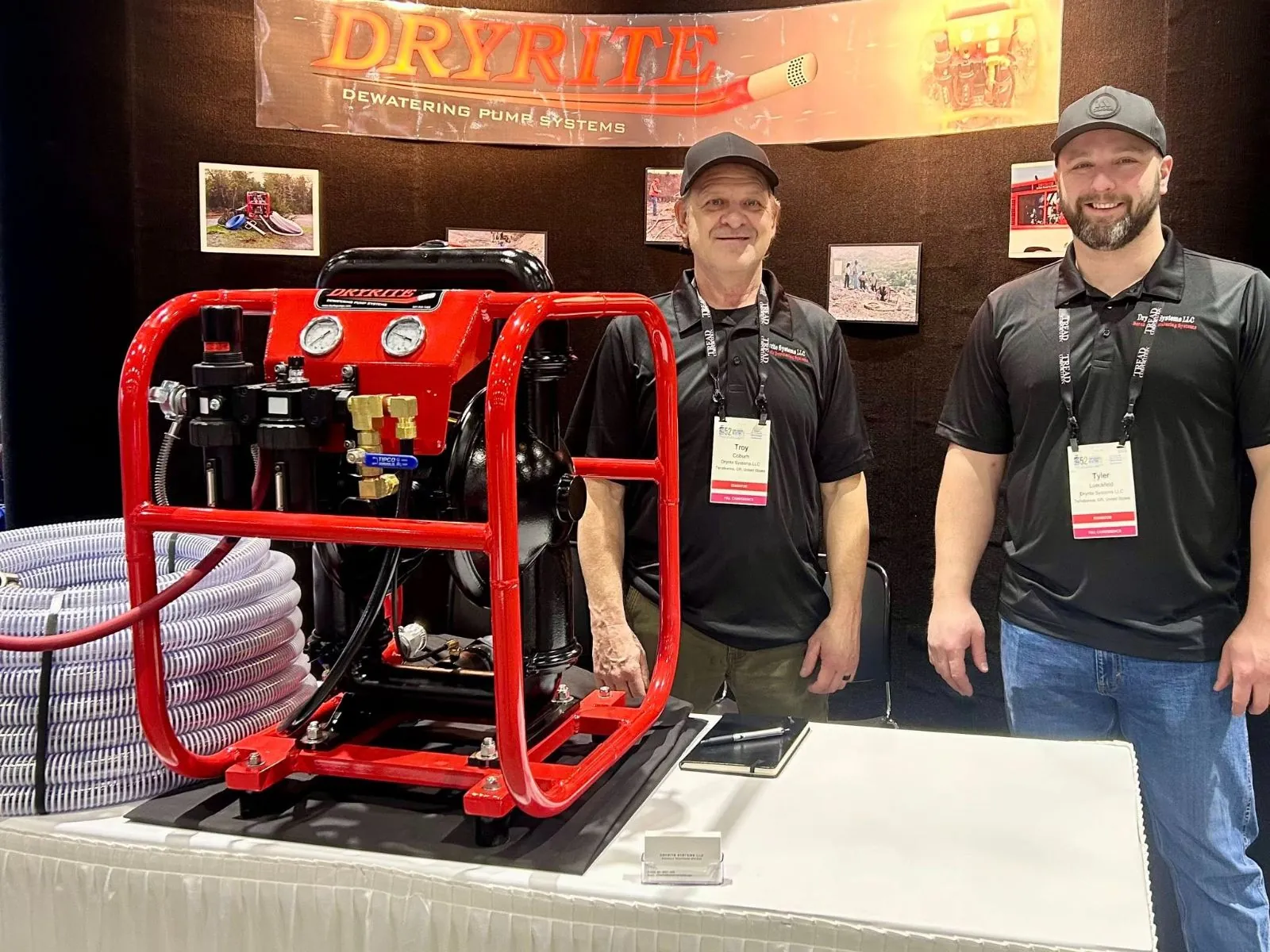
Founded in 1988 by a blasting-industry veteran who needed to keep running ANFO in wet ground. Run by Troy Coburn for two decades, then passed to Tyler Lueckfeld in 2023.
Tyler is bringing it back with new products and the next Jet Nozzle revision — same purpose-built engineering, for the people who load the holes.
Straight answers.
How deep can it pull water?+
Up to about 100 ft standard operating range. Performance depends on your air supply and site conditions.
How much water can it move?+
Roughly 15 GPM at 30 ft, 8–10 GPM at 50 ft, and around 5 GPM at 100 ft.
What air supply do I need?+
Typically 65–100 PSI with 70–100 CFM — within reach of a standard jobsite compressor or drilling rig.
How fast can I dewater a pattern?+
Usually a few minutes per hole, clearing a full pattern quickly depending on water table conditions.
How much can it save me?+
By enabling ANFO instead of emulsion, it often saves thousands per blast cycle in larger operations. Run your numbers in the calculator above.
How portable is it?+
Highly portable — hand-carried or vehicle-deployed, with quick hookup to standard air lines.
What maintenance does it need?+
Flush with clean water after use and inspect for damage. Overhaul the seals every 3–5 years.
How long will it last?+
20+ years if properly maintained. Some original 1988 pumps are still in operation.
Why is it better than other dewatering methods?+
Faster, simpler, and purpose-built for blast holes — no electrical equipment downhole, non-ferrous construction, and lower setup time than other pumps or vacuum systems.
Every Dry Borehole Starts Here
Tell us about your operation and we'll get you a quote — fast.